VMAP SC Newsletter
August 2025
We bring you the latest information on the workings of the VMAP SC.
VMAP SC Makes strong impact at NAFEMS World Congress 202
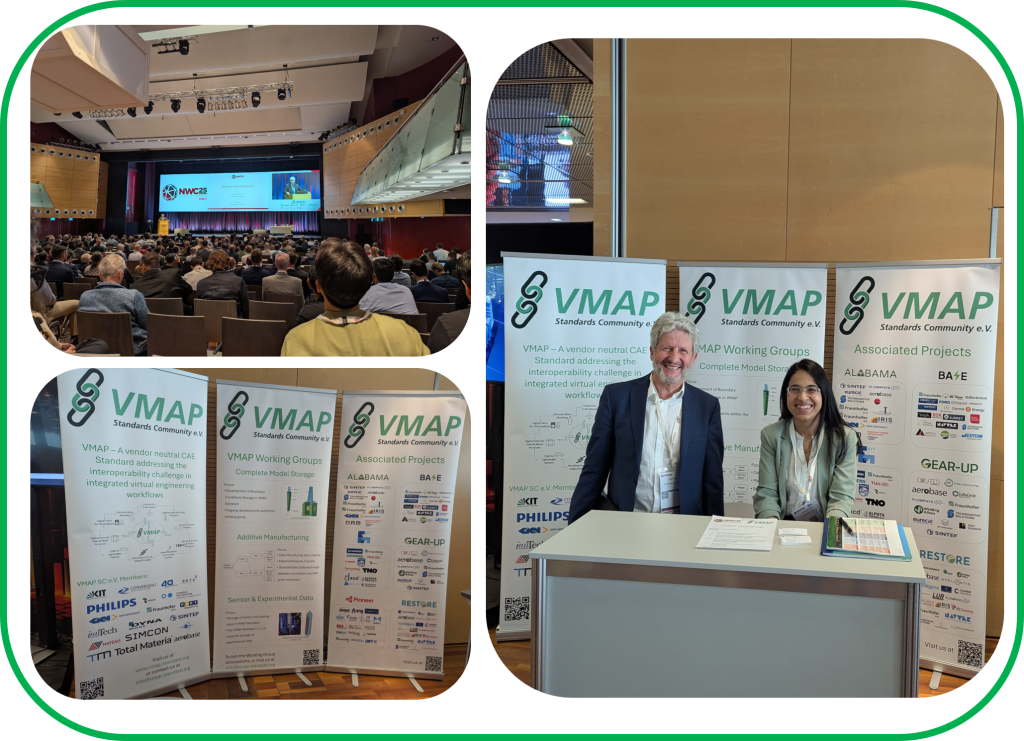
VMAP SC had a successful presence at the NAFEMS World Congress 2025 in Salzburg, where we showcased the VMAP Standard to an engaged audience of industry professionals. Throughout the event, we connected with numerous stakeholders who recognized the critical need for standardized data formats in the CAE and measurement domains.
Collaborative Workshop Drives Industry Dialogue
The highlight of our participation was a dedicated workshop on the final day, designed to share VMAP SC’s key objectives and gather valuable input from software vendors and industry leaders. VMAP SC Chairperson Klaus Wolf opened the session with a comprehensive overview of our organization and working groups, setting the stage for productive discussions.
Real-World Applications and Industry Perspectives
The workshop featured compelling presentations that demonstrated VMAP’s practical value: Panagiotis Fotopoulos from BETA CAE illustrated how software vendors can enhance simulation workflows by integrating VMAP with ANSA & META tools, showcasing the tangible benefits of standardized data formats. Fraunhofer SCAI, representing Aerobase Innovation AB, presented insights on multiphysics modelling in additive manufacturing and highlighted the growing demand for interoperability solutions. Gerd Rapin from Volkswagen delivered a powerful closing presentation on the automotive industry’s urgent need for standardized CAE simulation file formats. VW emphasized that achieving seamless virtual development processes across the entire automotive lifecycle requires streamlined CAE simulation data, with vendor-independent standardized formats like VMAP serving as essential building blocks.
Moving Forward Together
The workshop reinforced that VMAP represents a crucial step toward more efficient, interoperable CAE workflows across industries. We’re energized by the strong industry support and look forward to continuing these important collaborations.
New Additive Manufacturing Working Group launched to address Industry needs
Following the productive discussions at the VMAP User Forum 2025 in February, a clear consensus emerged: the additive manufacturing industry urgently needs standardized data formats. In response to this demand, the VMAP SC has established a dedicated Additive Manufacturing Working Group to develop comprehensive standards for AM processes.
Key Objectives Driving Innovation
The working group is focused on four critical areas that will transform how AM data is managed and shared:
- Seamless Software Integration
- Standardized data exchange between simulation software and AM print machines using VMAP format.
- Consistent export/import capabilities for material properties, boundary conditions, load cases, and results.
- Enhanced interoperability with multiphysics software, including CFD tools for streamlined multi-physics simulations.
- Advanced Material and Data Management
- Standardized transfer of complex material models with comprehensive property sets.
- Efficient data organization for improved storage, retrieval, and management in both cloud and local environments.
- Optimized workflows for large-scale simulations and iterative design processes.
- User-Centric Design
- Intuitive interfaces that integrate seamlessly into existing engineering workflows.
- Reduced learning curves and minimized data transfer errors.
- Structured data labelling that meets machine learning model requirements.
- Machine Learning Integration
- Bidirectional data flow enabling export to ML models and feedback integration.
- Iterative learning capabilities where ML algorithms optimize parameters for future simulation runs.
- Incorporation of measurement and experimental data for model validation and calibration.
Strong Industry Collaboration
The working group brings together leading organizations from across the AM ecosystem, meeting regularly on the first Monday of each month at 13:00 CEST. Our active partners include: Aerobase Innovations AB, AIMEN Centro Tecnológico, amsight GmbH, BMW, Cranfield University, Eindhoven Universtiy of Technology, Fraunhofer SCAI, Reden B.V., SINTEF Norway, Technical University of Munich, The Welding Institute, University of Patras. This diverse consortium ensures that the standards we develop will address real-world industry challenges while maintaining broad compatibility across different sectors and applications.
Enhanced MoldFlow Integration with VMAP Standard now available on Synera Platform
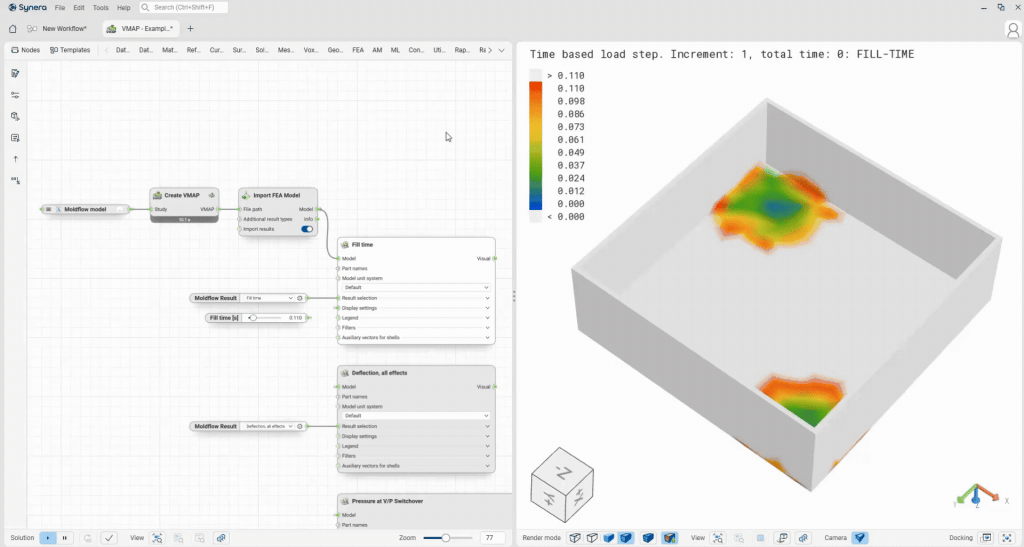
Engineering teams can now seamlessly visualize MoldFlow results directly within the Synera platform, thanks to the implementation of the VMAP Standard. This powerful integration has been developed by Code Product Solutions and is included in their latest software release. This development represents a significant step forward in simulation workflow efficiency, eliminating the need for complex data conversion processes and enabling engineers to access critical MoldFlow insights within their preferred analysis environment.
ALABAMA Project advances revolutionary Metal 3D Printing Technology in Manresa
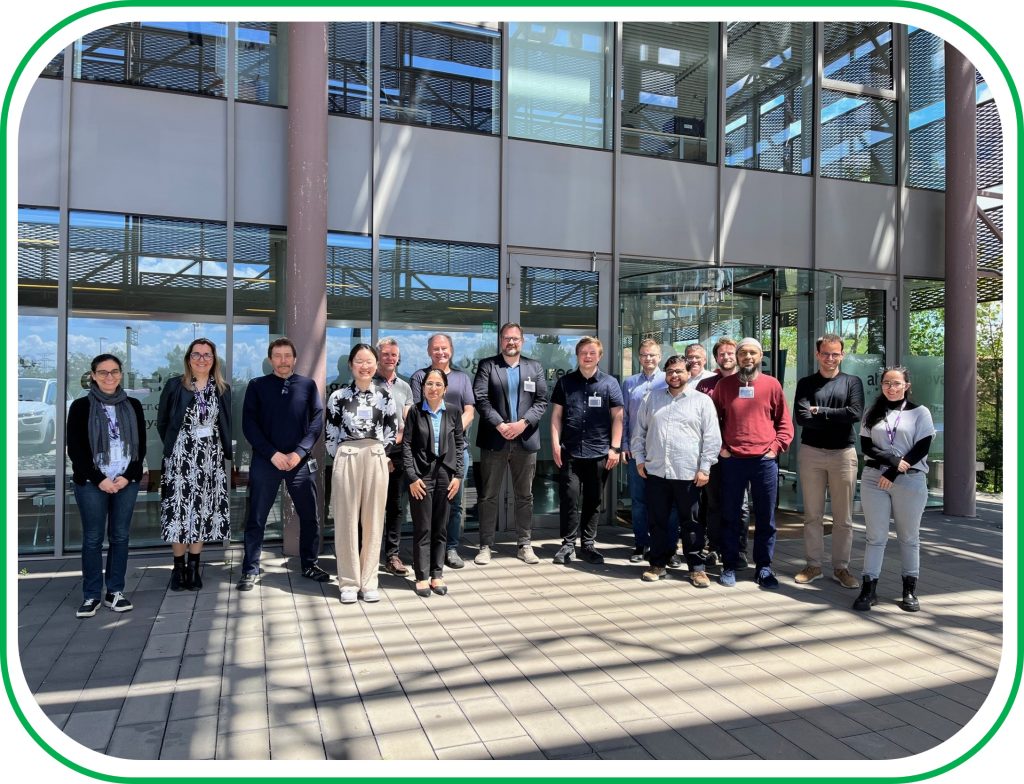
The third ALABAMA General Assembly convened at EURECAT’s state-of-the-art facilities in Manresa, Spain from 28-29 April 2025, bringing together leading researchers working to transform metal 3D printing. The ambitious project is developing breakthrough technology that dramatically streamlines additive manufacturing processes, with laser beam innovations that reduce both production time and material consumption by an impressive 90% compared to conventional methods.
Second Year Focus: Multi-Laser Beam Configurations
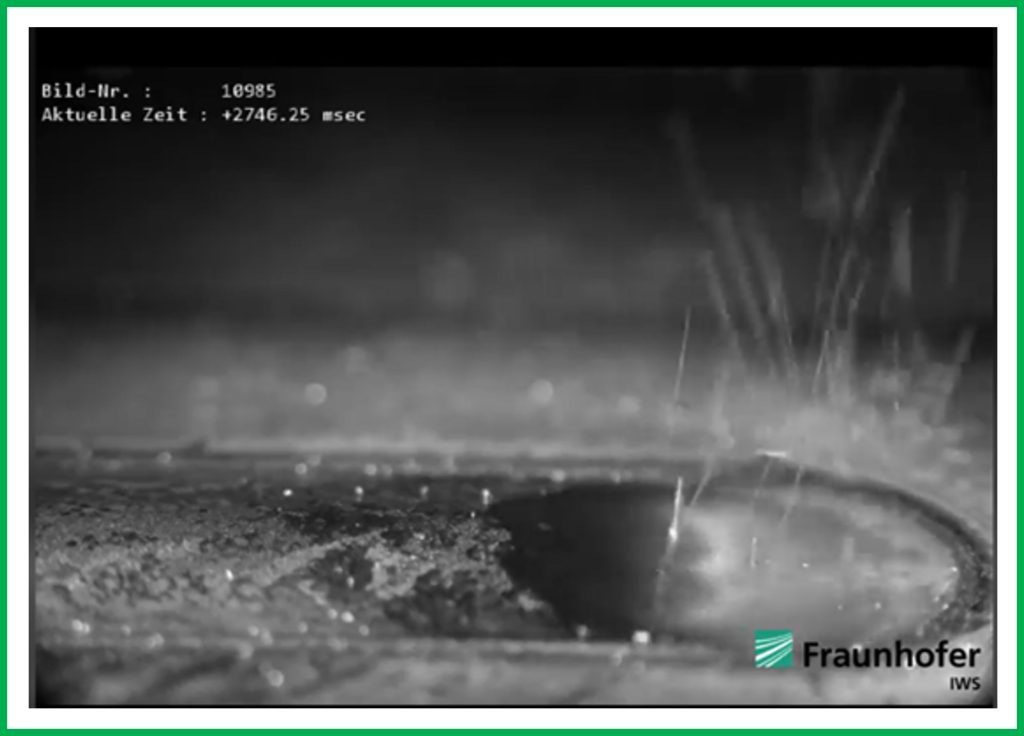
The intensive two-day meeting centred on critical technical discussions covering weld pool monitoring, advanced laser beam systems, material and process modelling, and the precise microstructures achieved through dynamic laser intensity adjustments. Now in its second year, the project has shifted focus to testing sophisticated multi-laser beam configurations that promise to revolutionize manufacturing efficiency. Current research encompasses several cutting-edge areas: optimizing melt pool behaviour through pulsed laser technology, advanced beam shaping techniques, and diverse multi-laser configurations. A key innovation lies in the system’s ability to dynamically adjust laser pulses, shapes, and configurations in real-time based on part geometry and temperature conditions during the build process.
Comprehensive Data Integration and Validation
The research spans both wire and powder-based additive manufacturing approaches, with extensive data collection through advanced camera systems and sensors. This comprehensive monitoring enables researchers to validate their simulations with real-world performance data, creating a robust feedback loop that continuously improves process accuracy and reliability.
Semantic Technology Development
This year marks a pivotal phase for developing specialized ontologies in the additive manufacturing domain. These sophisticated knowledge frameworks will power domain-specific semantic search tools, enhancing data accessibility and research collaboration across the field.
Collaborative Success in Historic Setting
Beyond the technical achievements, the meeting provided partners with an opportunity to explore EURECAT’s impressive testing laboratories and experience the medieval charm and rich history of Manresa, fostering the collaborative relationships essential to the project’s success.
For detailed information about this groundbreaking research, visit the ALABAMA Project website.
GEAR-UP Project drives Sustainable Manufacturing forward in Manresa
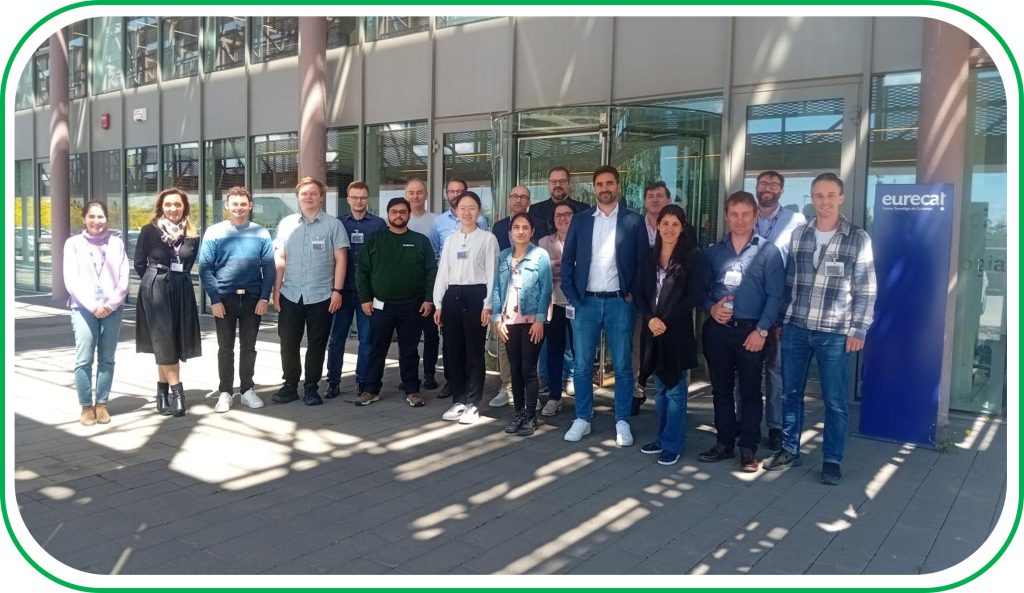
The second GEAR-UP General Assembly convened at EURECAT’s facilities in Manresa, Spain from 29-30 April 2025, marking significant progress in the project’s mission to revolutionize sustainable manufacturing. GEAR-UP is developing innovative digital tools designed to accelerate the adoption of recycled materials across the metal and plastics processing industries, addressing one of manufacturing’s most pressing environmental challenges.
Milestone Achievements and Strategic Planning
The comprehensive two-day meeting focused on celebrating key project milestones, including the successful completion of requirement gathering phases and the detailed elaboration of Key Performance Indicators (KPIs) for all use cases. These foundational achievements provide the framework for measuring success and ensuring the digital tools meet real-world industry needs.
Use Case Leadership and Vision
A highlight of the assembly was the presentation by the three use case leaders, who shared their detailed development plans and outlined their expectations for the project’s impact on their respective sectors. These presentations demonstrated the diverse applications and significant potential of GEAR-UP’s digital solutions across different manufacturing contexts.
Collaborative Environment
The meeting provided an excellent opportunity for partners to align their efforts, share technical insights, and strengthen the collaborative relationships essential for delivering transformative sustainable manufacturing solutions.
For comprehensive information about this important sustainability initiative, visit the GEAR-UP Project website.
Pioneer Project reaches Final Phase with breakthrough Digital Thread Technology in Paris
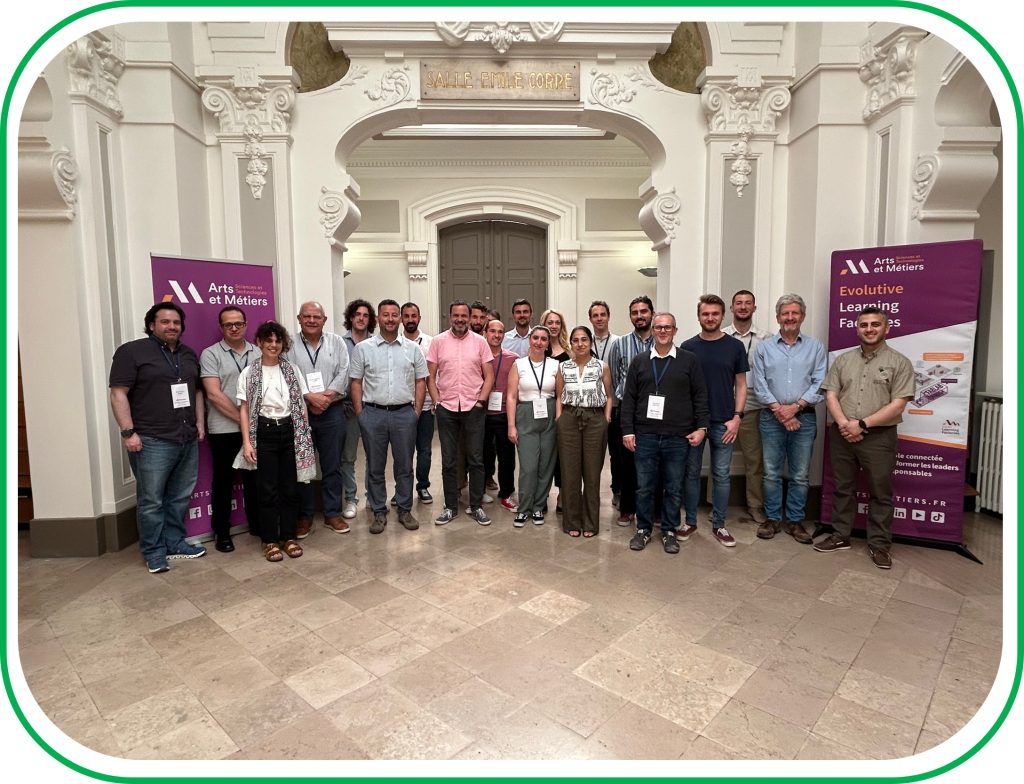
The 30th Month Pioneer General Assembly Meeting convened in Paris on June 11-12, 2025, hosted at the prestigious ENSAM (Arts et Métiers Institute of Technology) campus. The comprehensive two-day program combined intensive project discussions with an insightful visit to ENSAM’s advanced materials science laboratory, providing partners with valuable exposure to cutting-edge research technologies.
Digital Thread Platform Takes Centre Stage
As the project enters its final year, development efforts are concentrated on the open innovation platform and its critical components. The centrepiece is an innovative digital thread application that creates a seamless digital pipeline connecting all data generated throughout the entire material value chain. The team presented the API architecture alongside a compelling demonstrator, showcasing how diverse data streams from multiple sources will be semantically linked through domain-specific ontologies. A key achievement is the standardized delivery of this integrated data to the open innovation platform.
Real-World Applications Drive Innovation
The MX3D use case exemplifies the platform’s practical value, where distortion model results are efficiently transferred to Calculix (Open Source Abaqus Format) using the Fraunhofer SCAI FSI Mapper and VMAP format. This approach proved significantly more accurate and streamlined compared to traditional methods involving OpenFoam/Solid4Foam transfers to elastic models.

Advanced Manufacturing Integration
To minimize defective production and accelerate manufacturing processes, the project has implemented sophisticated reduced-order models for both primary use cases. Shop floor connectivity is achieved through OPC UA technology, enabling real-time data transmission from sensors and machinery to the digital thread system.
The project leverages Asset Administration Shell (AAS) technology as the foundation for bridging physical and digital manufacturing environments, implementing comprehensive interoperability and standardized data pipelines essential for Industry 4.0 applications.
Cutting-Edge Visualization and Quality Control
For multimodal, multi-dimensional end-to-end visualization, the team is developing an innovative augmented reality quality inspection tool. This advanced system overlays sensor-rich point clouds onto Wire Arc Additive Manufacturing (WAAM) prints, empowering operators to optimize machine parameters in real-time.
AI-Powered Material Intelligence
The project’s material testing and literature research components employ sophisticated machine learning approaches, including Physics-Informed Neural Networks, Hierarchical Temporal Graph Neural Networks, and neural operators. These advanced models extract valuable insights from heterogeneous data sources across the material value chain.
Sustainability Focus
The project will culminate in comprehensive life cycle analysis reports for use case-specific components, utilizing data collected from the demonstrators to assess environmental impact and sustainability metrics.
For detailed information about this groundbreaking manufacturing digitalization initiative, visit the Pioneer Project website.
Upcoming Working Group Meetings
| Full Model Storage | 18.08.2025 | at 09:30 |
| Additive Manufacturing | 04.08.2025 | at 13:30 |
Written by: Priyanka Gulati